Individualized Support for People with Dyslexia Based on the AFS Method
Support for people with dyslexia through an individually tailored approach to improving reading, learning, and concentration, based on the AFS method
Dyslexia work is based on the AFS method (Auditiv,
Funktional, Symptomatisch), a scientifically based and holistic approach
focused on developing cognitive and perceptual abilities.
The approach is based on three interconnected areas: attention, sensory and cognitive perception, and reading and writing. Instead of focusing exclusively on symptoms, it addresses their underlying causes, such as auditory processing, attention, memory, and the way information is processed.
The goal of the program is to build a stable foundation for
learning, develop greater self-confidence, and enable independent and
successful functioning in both educational and everyday life. Throughout the
process, improvements are achieved in reading, writing, and comprehension, as
well as a significant increase in concentration, memory, and learning
organization, while reducing frustration and errors.
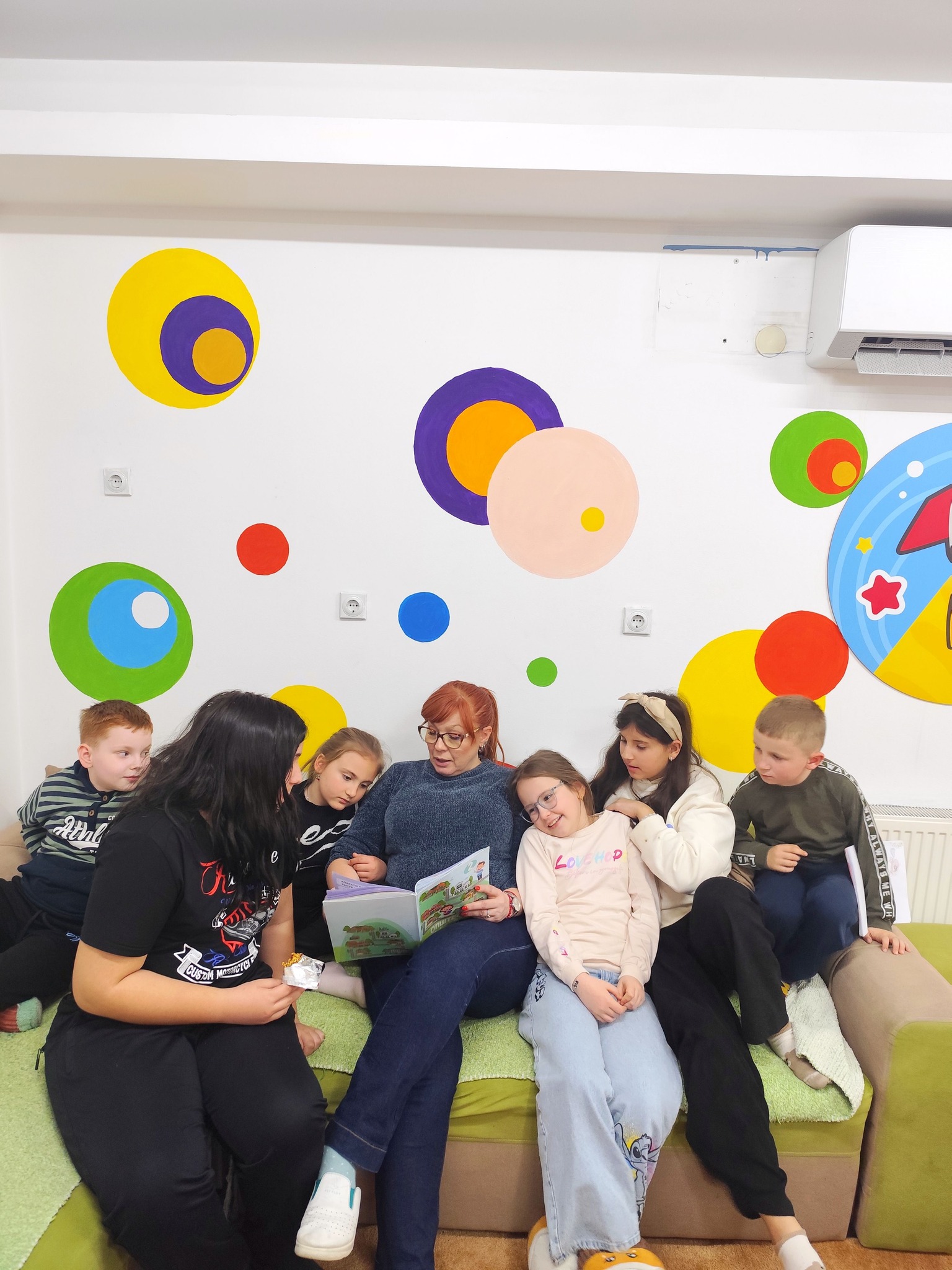
The program is designed for children, teenagers, and adults,
with an individualized approach based on age, needs, and goals. The most common
participants are primary school students.
The process begins with a detailed initial assessment to
identify specific challenges and strengths. Based on the results, a
personalized plan is created with structured exercises aimed at developing core
cognitive functions. The work is carried out continuously through regular
sessions and systematic progress monitoring, with one cycle typically lasting 6
to 12 months, depending on the initial condition and intensity of the program.
In practice, significant improvements are observed in
reading, comprehension, and learning, as well as in how individuals approach
daily tasks. Over time, reading becomes clearer and more confident,
concentration and focus improve, and learning becomes more organized and
efficient. Memory is further developed, frustration related to learning
decreases, and self-confidence and motivation significantly increase.
Additionally, phonetic and phonemic awareness is strengthened, along with
communication skills, leading to greater confidence, openness, and independence
in the school environment.
What distinguishes this approach is long-term practical
experience and individualized work with each client, with a strong focus on
sustainable results rather than short-term improvements. In addition,
techniques for speed reading and learning (Power Reading), introduced in North
Macedonia in 2008, are applied to further enhance and accelerate skill
acquisition.
The collaboration process begins with an initial
consultation, followed by an assessment and the development of a personalized
work plan.
Explore more people
600.00 mkd